Last spring, a homeowner in St. Petersburg called us with a yard she described as embarrassing. Three dead Sabal Palms leaning toward the back fence. A cracked concrete slab where a patio used to be. Sandy, compacted soil that drained so fast nothing stayed alive past July. Her neighbor had just finished a full redesign, and every morning she walked past it to get the mail. She knew she wanted something better – she had no idea where to start.
This guide focuses on the design process itself – one of seven core decisions covered in the complete Pinellas County landscape design resource for homeowners ready to plan properly.
If any part of that sounds familiar, you are in the right place. The right backyard landscape design ideas – ones built around your actual space, your lifestyle, and Florida’s climate – can turn a yard like that into something you are genuinely proud of. You do not need a design degree or a runaway budget. You need a solid plan. This guide walks you through every step of building one.
Before building a design, understanding what landscape design costs in Pinellas County – and what drives those numbers – helps you size the plan to your actual budget from the start.
Why Great Backyard Landscape Design Ideas Start With a Plan – Not a Shovel
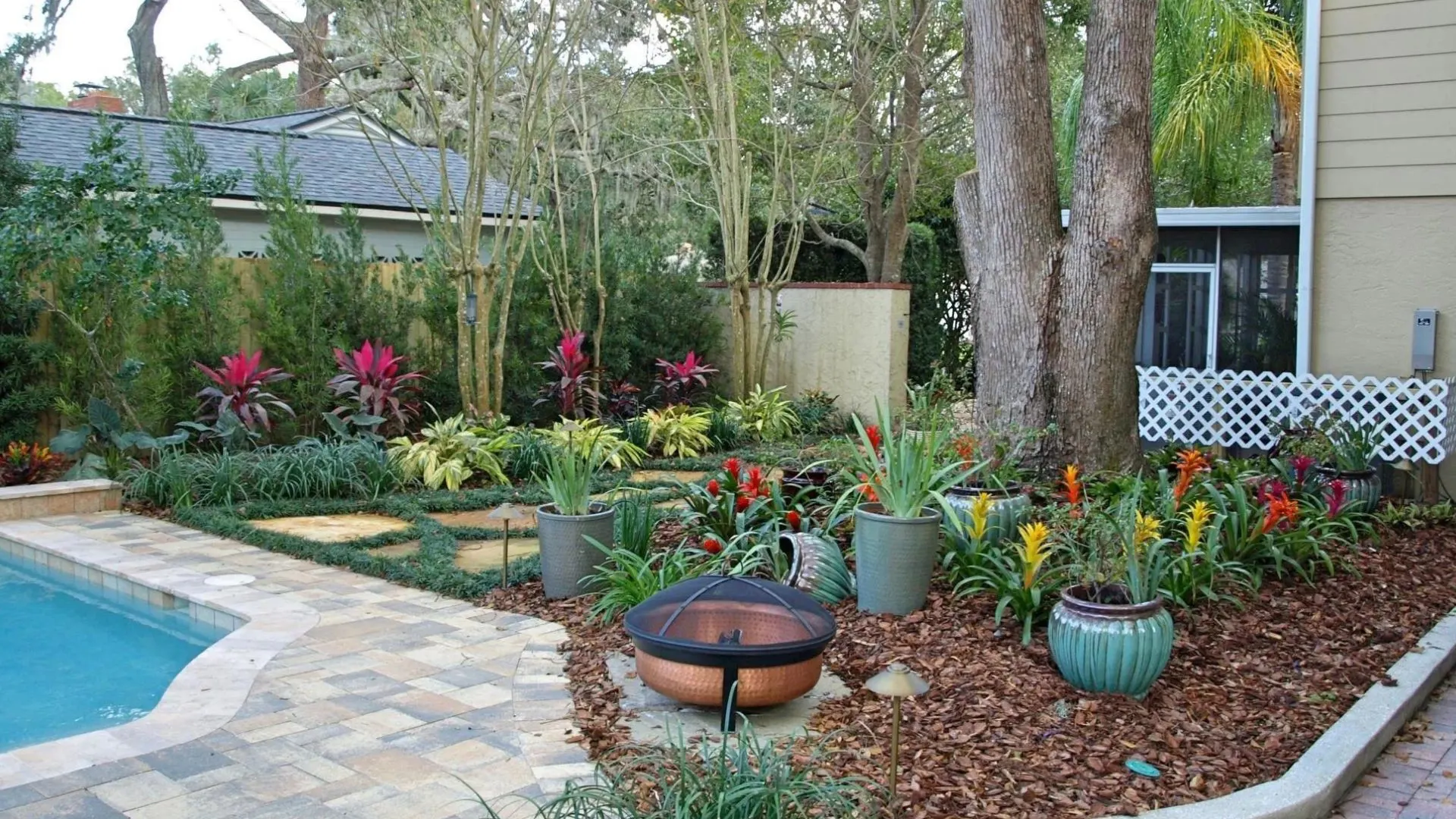
Before you buy a single plant or move a single pound of soil, you need to understand your space. Skipping the planning phase is the number one reason DIY landscape projects stall, go over budget, or end up looking disconnected. Whether your goal is a low-maintenance backyard makeover, a shaded family retreat, or a polished outdoor entertaining space, the plan always comes first.
Skipping the planning phase is the number one reason DIY landscape projects stall – and it leads directly to the common landscape design mistakes that ruin Pinellas County yards every experienced designer works to prevent.
Here is why this matters beyond aesthetics: according to the University of Florida’s Institute of Food and Agricultural Sciences (UF/IFAS), landscape irrigation accounts for up to 50 percent of a Florida home’s total water use. Homeowners in Pinellas County who plan their yards around Florida-friendly landscaping principles – the right plants in the right places, designed to thrive without excess watering – cut that number significantly. That translates to lower utility bills every month, not just a prettier yard. Good design pays for itself.
So let’s build a design that works for Florida.
Step 1: Walk Your Yard and Assess What You Are Working With
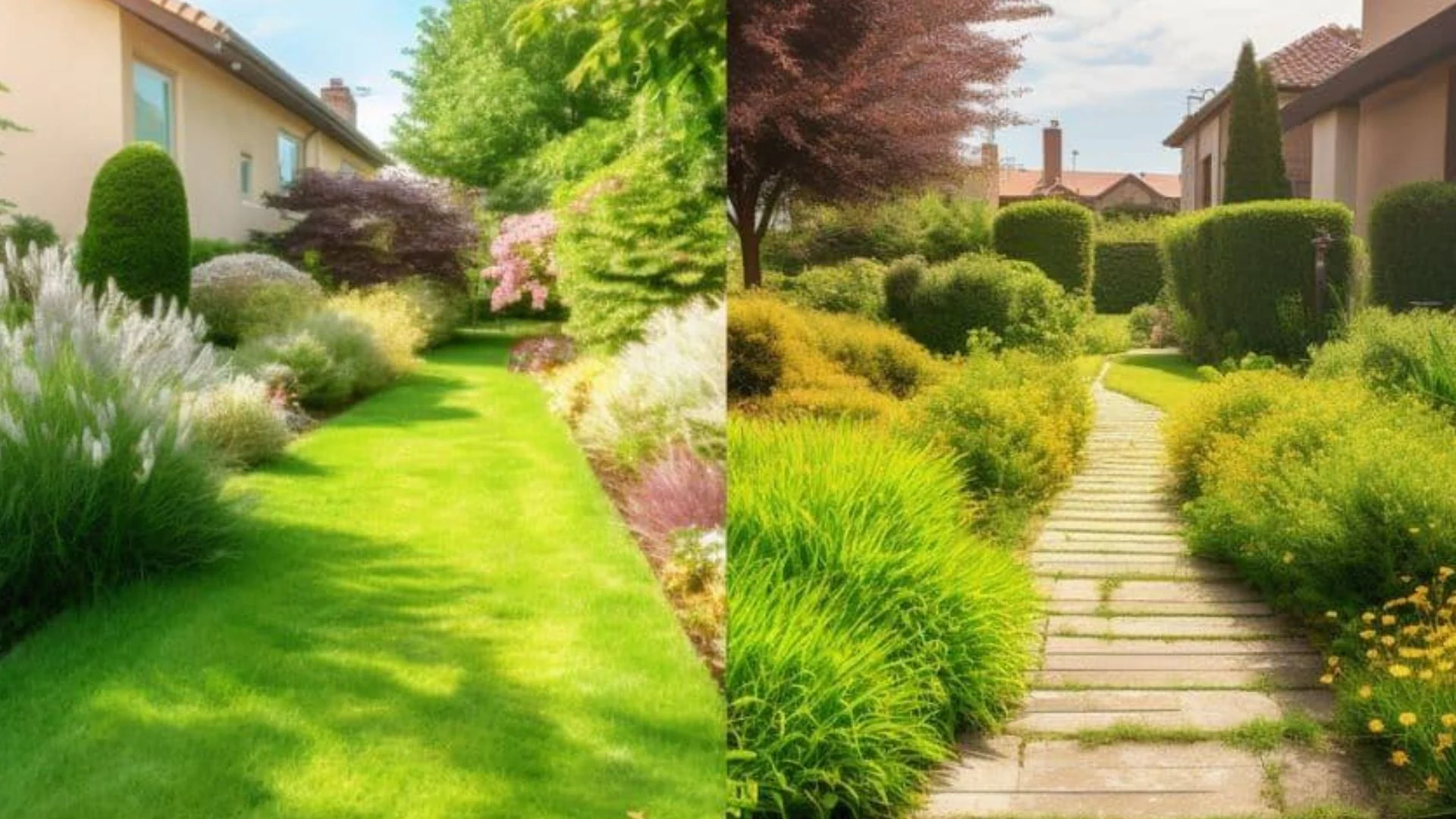
Grab a notepad and spend 20 minutes in your yard at different times of day. You are looking for four things:
- Sun patterns – Which areas get full sun, partial shade, or deep shade? This determines everything about which plants will survive and which will struggle.
- Drainage – Are there spots that pool water after a Florida rainstorm? In Pinellas County, poor drainage leads to mosquito problems, root rot, and erosion. Identifying it before you plant saves you from replacing dead material later.
- Existing features – Mature trees, fencing, concrete, utility boxes. Note what stays, what can go, and what you have to design around.
- Soil condition – Sandy soil is common throughout the Pinellas County and Bay area region. It drains fast but holds fewer nutrients, so you may need to amend it with compost before planting.
This assessment shapes every decision you make in the steps ahead.
Step 2: Define Your Zones – How Do You Actually Want to Use This Space?
A well-designed backyard is not just attractive – it works for the way your family lives. Divide your yard into functional zones based on your actual priorities:
- Living zone – patio, deck, outdoor dining, or lounge seating where the household gathers
- Play zone – open lawn, swing sets, or pet run areas with enough clear space to actually use
- Garden zone – flower beds, raised vegetable planters, or native plant beds
- Privacy zone – dense shrub borders, ornamental grasses, or living fence plantings that create separation from the street or neighboring yards. Backyard privacy landscaping is one of the most common requests we receive from homeowners across Clearwater and St. Pete – especially on corner lots or in tighter neighborhoods where fencing alone is not enough.
- Transition zone – pathways, mulch borders, and the visual connectors that link all other areas together
You do not need all five zones. A retired couple in Safety Harbor has very different priorities than a young family in Clearwater with three kids and two dogs. Pick the zones that fit your life, sketch them onto your yard diagram, and use that sketch as your guide from this point forward.
Step 3: Choose Plants That Thrive – Not Just Survive – in Pinellas County
This is where many DIY landscape design projects go sideways. A plant that looks gorgeous at the nursery can wilt through its first Pinellas County summer if it is not suited to the region. Florida’s climate is demanding – high heat, intense UV, humidity, hurricane-season wind and rain, and occasional cold snaps in January. Your plants need to handle all of it without constant babysitting.
The most reliable approach for this region is to build your yard around Florida-friendly landscaping – a framework developed by the University of Florida’s IFAS Extension that emphasizes right plant, right place. This means choosing species that are naturally adapted to local soil, rainfall patterns, and heat levels so they need less water, less fertilizer, and far less maintenance over time.
When it comes to Pinellas County native plants, these are some of the most dependable choices for residential and commercial landscapes in the area:
- Muhly Grass – feathery pink blooms in fall, drought-tolerant once established, and thrives in the sandy soils common across Pinellas
- Firebush – attracts butterflies and hummingbirds, handles intense heat and poor drainage, and stays evergreen through most Florida winters
- Coontie – the most cold-hardy native palm relative in Florida, deer-resistant, and nearly impossible to kill once it establishes
- Bougainvillea – high-impact color on fences, trellises, or as a specimen planting; thrives on neglect once roots are set
- Simpson’s Stopper – an underused native shrub that works as a hedge, provides white blooms and orange berries, and handles partial shade – ideal for privacy borders near fences
One rule applies across all of them: give plants room to grow. Florida’s growing season is aggressive, and a plant that looks sparse in March will fill in fast by June. Overcrowding is one of the most common mistakes in DIY planting plans and one of the most expensive to fix after the fact.
Step 4: Map Out Your Garden Layout Ideas With Flow in Mind
Your garden layout ideas should move people through the space naturally – not just look good in a photo. A layout that works has:
- Clear sightlines from one zone to another so the yard feels open and connected, not chopped up
- Defined pathways using pavers, stepping stones, or decomposed granite to guide movement. People will walk the path of least resistance, so design with that behavior in mind
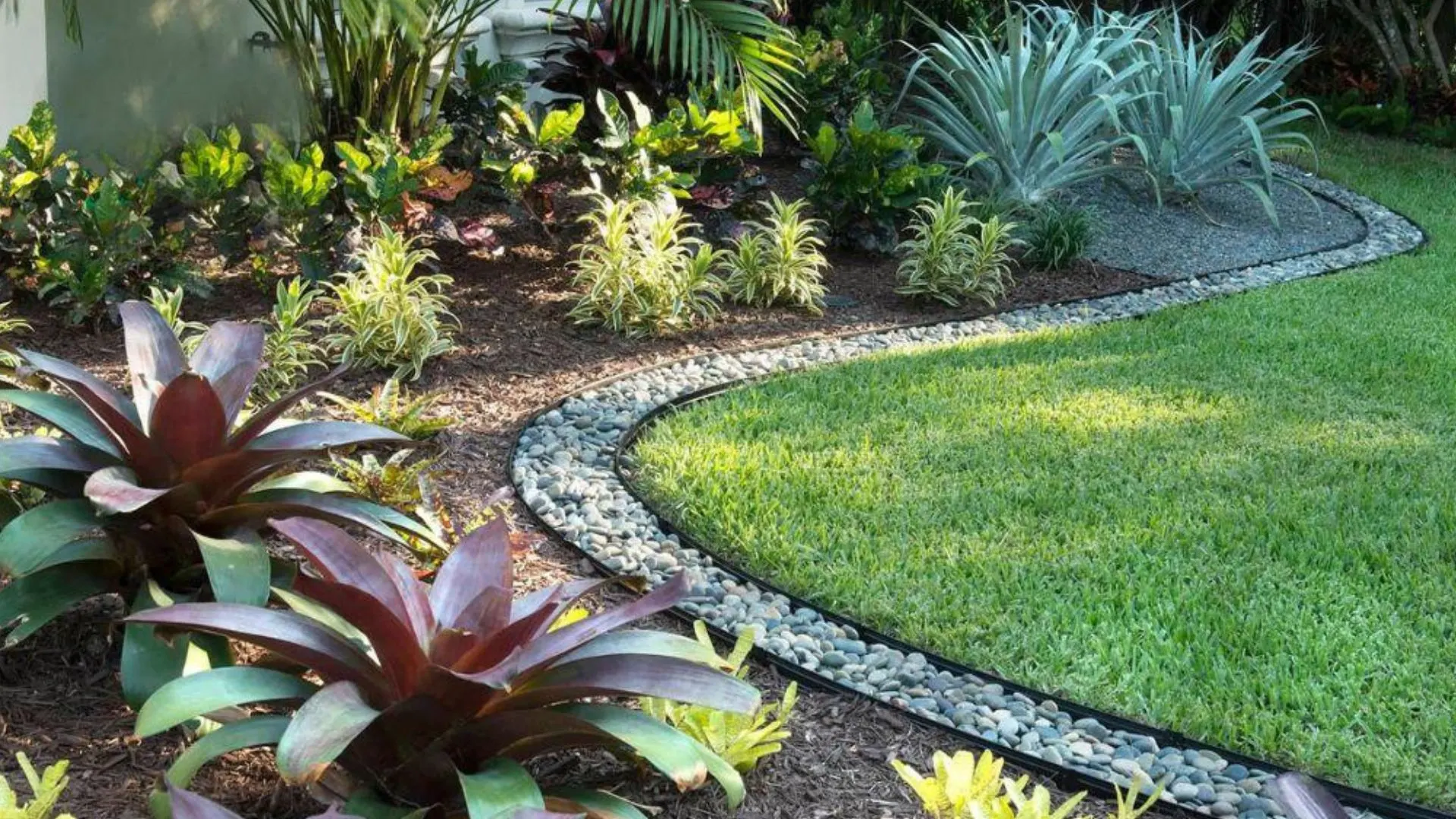
- Layered heights – ground cover at the base, mid-height shrubs in the middle, and taller trees or structures as a backdrop. This creates depth that flat, single-level planting can never achieve
- A focal point – a fountain, a statement tree, a fire pit, or even a large ceramic planter. Focal points give the eye somewhere to land and make even simple yard designs feel intentional
Also consider negative space – open lawn areas or clean gravel beds give the eye a place to rest and keep the design from feeling cluttered. In residential landscaping, less is almost always more.
Step 5: Use These Outdoor Design Tips to Pull the Whole Yard Together
Once your zones and plant selections are mapped, these outdoor design tips close the gap between a plan and a finished yard:
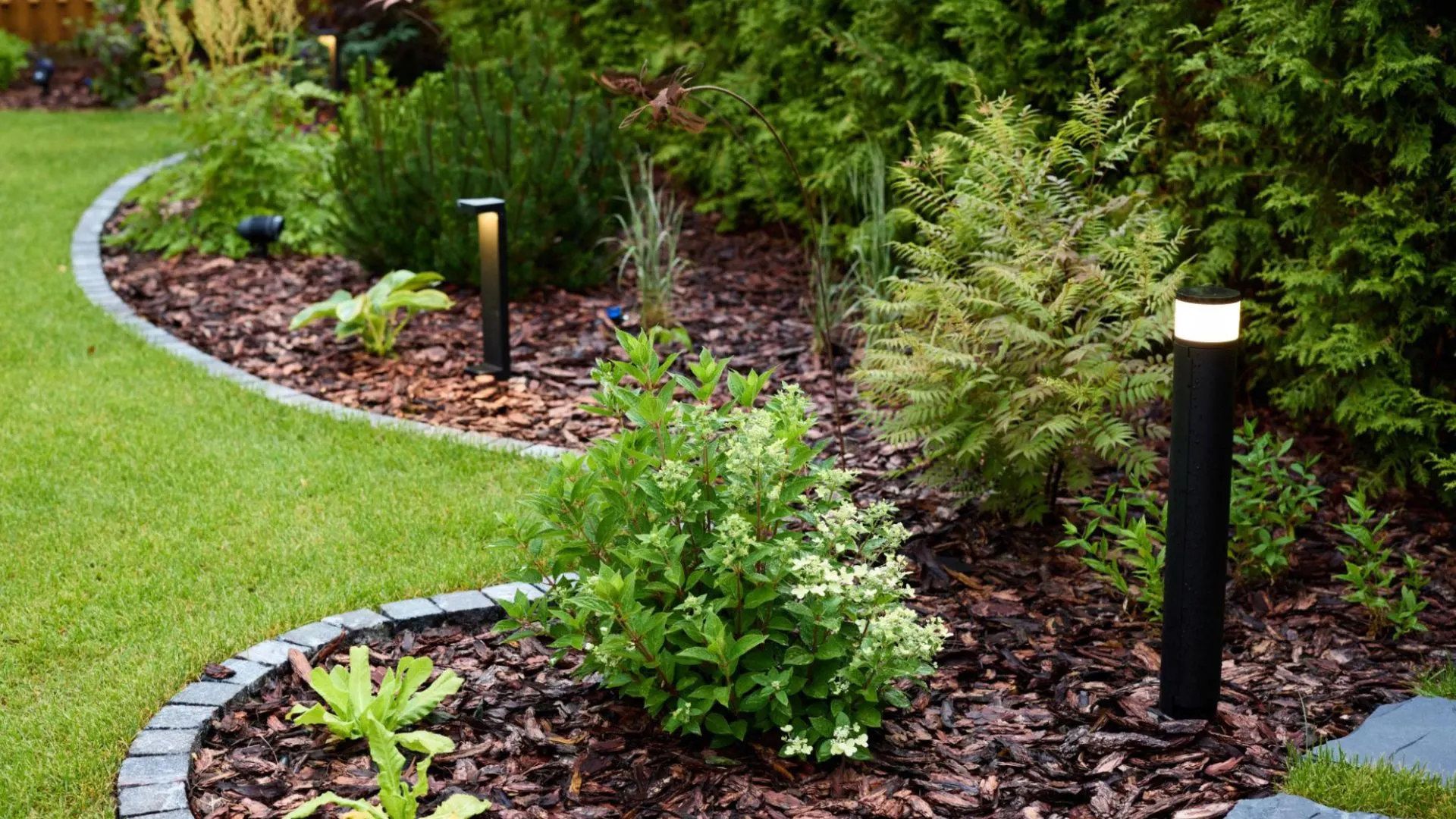
Lighting extends your yard into the evening. Well-placed landscape lighting makes your outdoor space usable after sunset and adds drama to trees and structures you have already invested in. Solar path lights are a low-cost entry point; hardwired uplighting on specimen trees or architectural features delivers the most visual impact.
Mulch is one of your best investments. In Pinellas County’s heat, a 2 to 3 inch layer of mulch around plant beds regulates soil temperature, retains moisture during dry stretches, and suppresses weeds. Keep it pulled away from tree trunks – direct contact causes rot.
Hardscape defines the design. A simple paver patio, gravel walkway, or low retaining wall adds structure that plants alone cannot provide. Hardscape elements hold up in Florida’s weather, require no irrigation, and make the overall design feel finished and intentional.
Clean edges make everything look professionally maintained. A crisp separation between lawn and plant beds is one of the highest-impact, lowest-cost improvements in any yard. It signals care and attention even when a design is simple.
DIY Landscape Design vs. Hiring a Pro – Which Makes Sense for You?
DIY landscape design is completely achievable – especially for homeowners who want to tackle the project in phases and have the time to learn as they go. You can save significantly on labor if you have a clear plan and a willingness to put in the weekend hours.
That said, some situations call for a professional:
- Yards with drainage problems or significant elevation changes that need engineering solutions
- Irrigation system installation, redesign, or upgrades to meet Pinellas County’s watering restrictions
- Tree planting, pruning, or removal – especially for larger trees near structures, driveways, or utility lines
- HOA communities and commercial property managers in the St. Pete, Clearwater, and Safety Harbor areas that require formal design documentation or approved plant lists
Working with a local team means your design comes pre-calibrated to Pinellas County’s soil, climate, and municipal codes – without the guesswork and without the risk of planting something that will not make it through its first Florida summer.
Pro Tree Care Tip
One of the most common – and costly – mistakes homeowners make is planting trees too close to their home, driveway, or underground utilities. In Pinellas County, popular choices like Live Oaks and Sabal Palms can spread 40 to 60 feet wide at full maturity. A licensed arborist’s rule of thumb: plant large shade trees at least 20 feet from your home’s foundation, and always call 811 to locate underground utilities before you dig. Getting tree placement wrong early creates expensive corrections down the road – and in some cases, structural damage to your home or hardscape that far outweighs the original cost of the landscaping.
Ready to Turn Your Backyard Into a Space You Are Proud Of?
You now have a clear blueprint: assess your space, define your zones, choose the right plants for Florida’s climate, and layer in the design details that make it feel finished. The difference between a yard that stays on the to-do list and one that actually gets built is usually just one decision – deciding to start. Once your design is finalized, a Pinellas County landscape design project timeline gives you a realistic picture of how long each phase will take before installation begins.
Schedule a free consultation with the team at Pinellas Landscaping Websites – and here is exactly what that means: we walk your yard with you, assess your soil conditions and drainage, identify any problem areas, and send you a written prioritized action plan within 48 hours. No cost, no obligation, and no generic advice that does not account for your specific lot. We work with homeowners, families, HOA communities, and commercial property managers rooted in Pinellas County – from Downtown St. Pete and Clearwater to Safety Harbor and the surrounding Bay areas. Book your consultation today and let’s build something built for Florida.