Most Tampa Bay yards fail for the same five reasons. Here is how to sidestep every one of them — before you spend a dollar on plants.
The $4,000 Lesson Nobody Wants to Learn
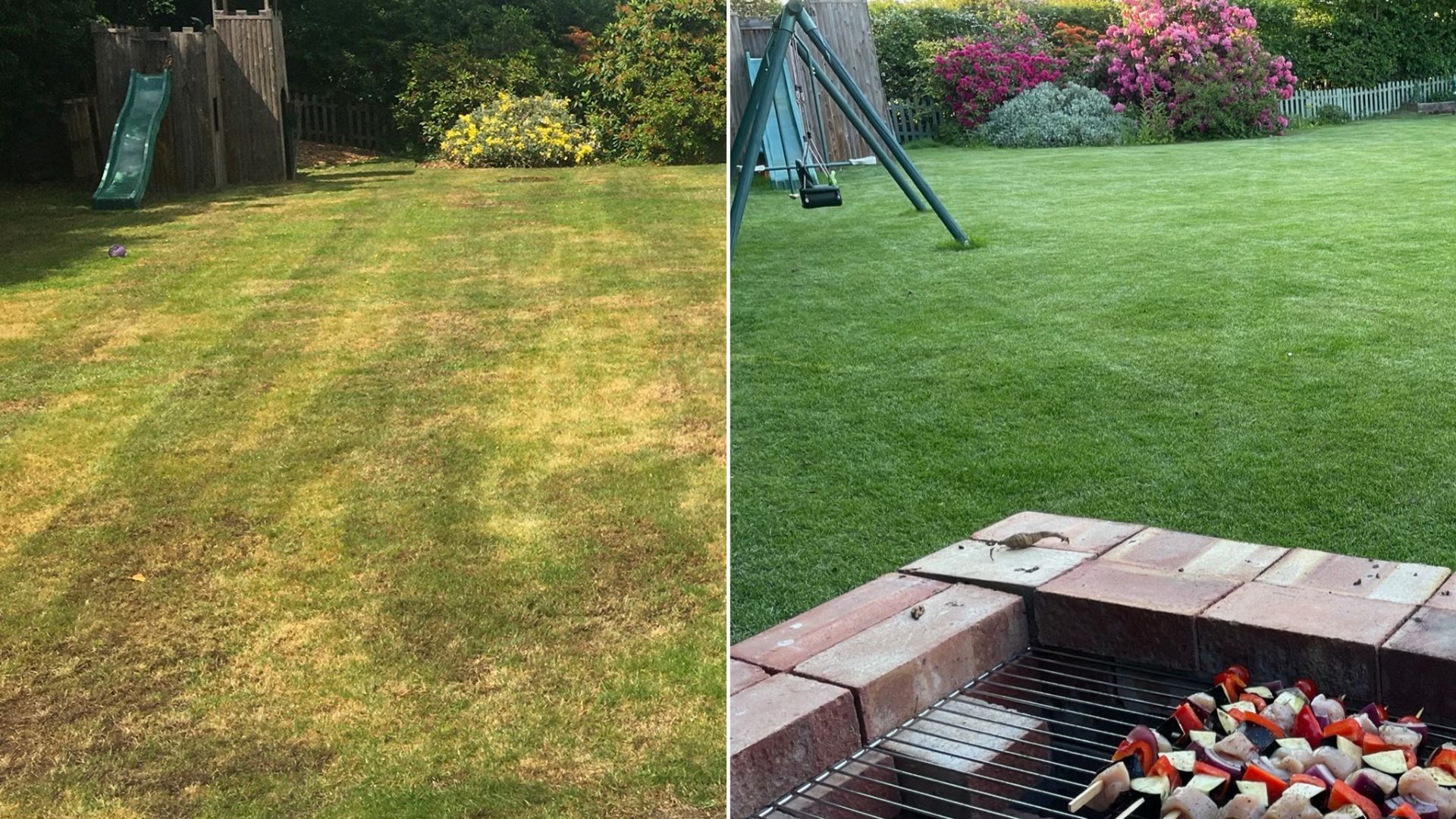
A homeowner in Safety Harbor recently shared a number that stopped the room: she had spent just over four thousand dollars on landscaping in the three years since buying her home. New sod twice. Three rounds of replacement shrubs. A full bed re-mulch after a drainage problem ate the original one. And her yard, by her own description, still looked like it was struggling.
She is not an outlier. She is the rule.
The pattern repeats across Pinellas County neighborhoods with remarkable consistency. Homeowners invest real money in landscapes that were not designed for where they actually live. Plants selected for aesthetics rather than performance. Beds built with no thought for where the water goes on a July afternoon. Turf pushed into shaded corners where it was never going to thrive. The money disappears. The yard still fights back every summer.
The problem is almost never effort. It is almost always the absence of a plan designed specifically for this climate.
Tampa Bay’s coastal climate is subtropical in the truest sense: extreme heat, dramatic rainfall swings, sandy soil that behaves nothing like the loam shown in most gardening guides, and a hurricane season that reminds you every year that your landscape choices have structural consequences. Planning a resilient landscape here requires local knowledge. This guide is that knowledge.
Landscape Planning vs. Basic Lawn Care
There is a conversation that landscape professionals in Tampa Bay have constantly: a homeowner calls because their yard looks bad and they want to know what to plant. But the real problem is not what they are planting. It is that no one ever designed the system those plants are living in.
Lawn care — fertilizing, mowing, irrigation management, pest control — operates within a system. Landscape planning creates that system in the first place. The distinction sounds academic until you realize what it costs to skip it.
| What People Think | What Actually Works |
|---|---|
| Water more when plants look stressed | Match plants to your microclimate so stress is rare |
| Fertilize heavily for fast growth | Build organic matter in soil for sustained health |
| Replace what dies with the same plant | Diagnose why it died before replanting anything |
| Edge and mow to make it look maintained | Design beds that look intentional with minimal maintenance |
| One irrigation schedule for the whole yard | Zone by sun exposure, soil depth, and plant type |
Landscape planning asks the questions lawn care never gets to: Where does water pool? Which areas heat up earliest and cool last? What will this yard look like in ten years if no one changes it? Answering those questions before you plant is the single highest-return thing you can do for a Tampa Bay property.
Environmental Challenges in Pinellas County
Three forces shape every landscape decision in this county. Ignore any one of them and the other two will find you eventually.
The Heat and Humidity Equation
Pinellas County averages 233 days with temperatures above 80 degrees Fahrenheit. Through the wet season, the humidity sits persistently above 80 percent. Together they create a pressure cooker that does not just challenge plants — it fundamentally changes the rules of landscape management.
Fungal problems explode in this environment. Root systems that cannot drain adequately will rot. Pest populations — whitefly, chinch bugs, and scale insects chief among them — multiply in heat-stressed plants far faster than they would in a well-positioned, low-stress garden. The solution is not chemical. It is positional. A plant placed in conditions that match its needs resists these pressures naturally. A plant placed incorrectly becomes a problem you manage indefinitely.
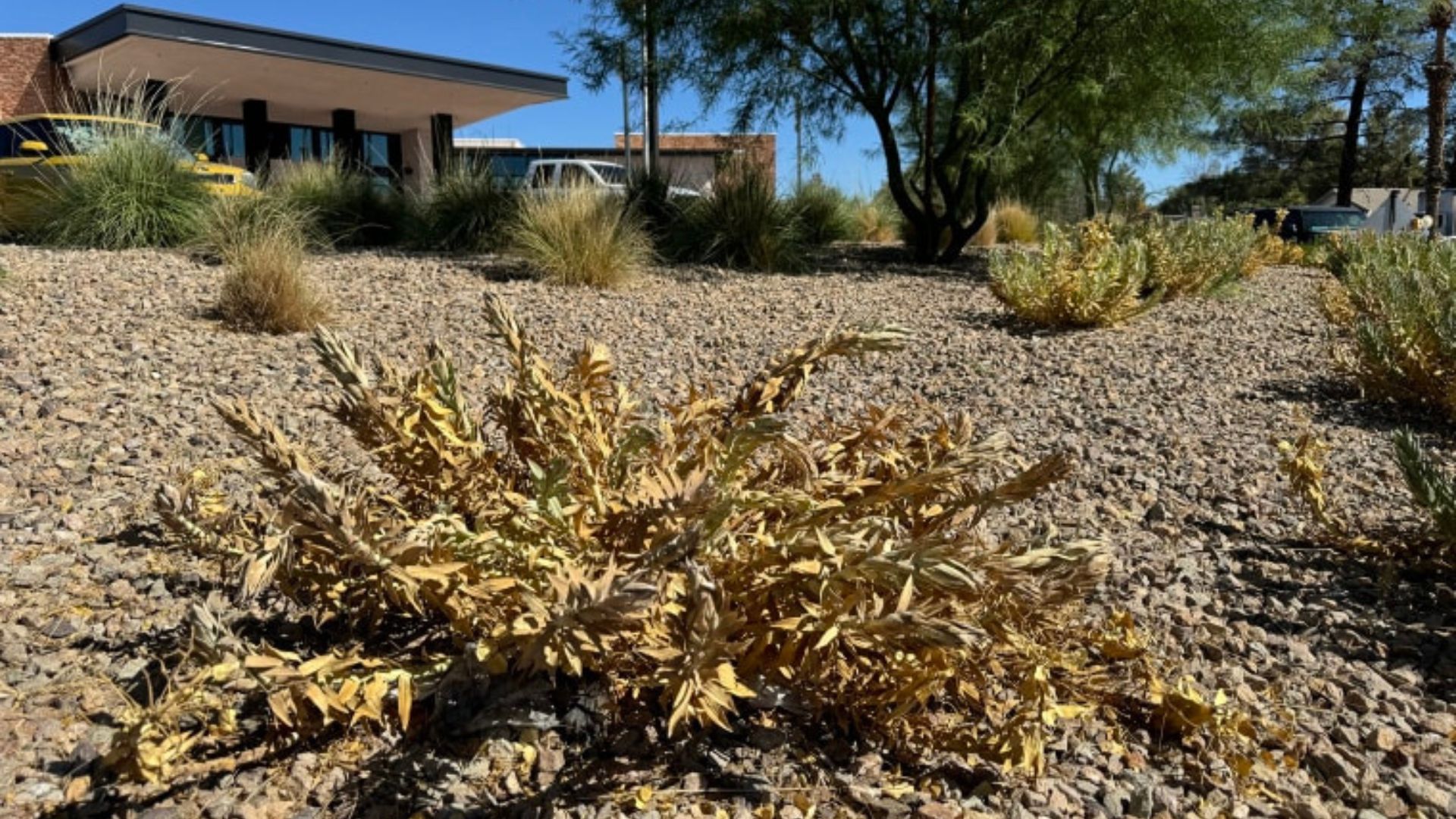
Microclimate awareness matters here more than almost anywhere else in the country. The difference between the west-facing wall of your home and the dappled shade of your back corner can be 25 degrees on a July afternoon. That gap determines what grows and what dies.
What Sandy Soil Is Actually Telling You
Entisol — the dominant soil type across most of Pinellas County — is essentially mineral sand with minimal organic content. Water moves through it in minutes, not hours. Nutrients follow. This creates a landscape paradox: the county receives 50-plus inches of rain a year, yet established plants can show drought stress within days of the last rainfall because nothing in the soil holds moisture long enough to matter.
The instinct is to compensate with more irrigation and more fertilizer. Both approaches make the underlying problem worse. Heavy irrigation on sandy soil flushes nutrients faster. Excess fertilizer runs off into Tampa Bay’s already nitrogen-stressed estuary. The productive path is soil amendment with quality compost, organic mulch layered three inches deep, and a plant palette that genuinely evolved for nutrient-lean sandy conditions — which most Florida natives did.
Stormwater: Your Yard’s Hidden Design Brief
In a single August storm, Tampa Bay can receive two to four inches of rain in under 90 minutes. That water has to go somewhere. Where it goes on your property — and how fast — will either support your landscape or destroy it.
DATA POINT | UF/IFAS Florida-Friendly Landscaping Program
Research from the University of Florida IFAS Extension found that properties converted to Florida-Friendly Landscaping principles — including native plantings, reduced turf, and improved grading — can reduce residential stormwater runoff volumes by 30 to 40 percent compared to conventional maintained landscapes.
In coastal Pinellas County, that reduction directly benefits Tampa Bay’s seagrass beds, which have recovered significantly from historic lows precisely because of watershed management improvements — and which remain sensitive to nutrient-laden residential runoff.
Stormwater management is not a bonus feature for environmental enthusiasts. It is a functional design requirement. A landscape that does not direct water away from structures, slow sheet flow across beds, and absorb moderate rainfall events will erode, flood, and fail — no matter how well-chosen the plants are.
Core Principles of Florida-Resilient Landscaping
Florida-resilient landscaping is not a look. It is a set of operating principles that apply regardless of whether you want a formal tropical garden, a casual native meadow, or a minimalist hardscape. These five principles underpin every design decision that performs well here.
- Right plant, right place — every time. No principle in this list matters more. A Florida native in the wrong spot will struggle just like any exotic would. Soil moisture, sun duration, wind exposure, and mature size must all align before a plant goes in the ground.
- Build the soil before you plant. Sandy Pinellas soil benefits enormously from organic amendment. Work quality compost into planting beds and commit to three-inch organic mulch layers. You are not just feeding plants — you are building the water-retention capacity the soil naturally lacks.
- Reduce managed turf strategically. Augustine and Zoysia grass are among the most resource-intensive elements in any Florida landscape. Strategic reduction — replacing turf with native groundcovers, mulched beds, or permeable hardscape in low-use areas — cuts water and fertilizer needs without sacrificing aesthetics.
- Manage water before it becomes a problem. Grade planting beds so water moves away from structures. Create swales that direct runoff to planted areas rather than pavement. If you have a persistent low spot, design a rain garden rather than fighting it.
- Layer vertically for resilience. Canopy trees, understory shrubs, groundcovers, and mulch together create a system that is more than the sum of its parts. Layered plantings retain moisture, buffer temperature extremes, build organic matter over time, and support the predator insects that keep pest populations in check.
Landscape Layout Planning: Zoning Your Yard
Every property in Pinellas County has distinct microclimates — small areas of meaningfully different light, moisture, temperature, and wind exposure. Zoning is the process of mapping those differences and designing to them rather than against them.
Before you draw anything, spend time observing. Check your yard at 7 a.m., 2 p.m., and 7 p.m. on a clear day. Walk it during a rain event. Note where water moves, where it pools, where it drains quickly. Take photos. Those observations are worth more than any plant catalog.
Top Design Approaches for Tampa Bay Homes
The best landscape design for your home is the one that reflects your actual lifestyle and maintenance appetite — not the one that looks best in a magazine. Here are the four approaches that consistently perform well in Tampa Bay’s coastal climate:
- The Ecotype Garden- The highest-performance option. Designed entirely around plants indigenous to the specific ecotype of your lot — coastal strand, flatwoods, scrub, or hammock. Coontie, muhly grass, saw palmetto, Simpson stopper, beautyberry, and gopher apple are regional staples that require essentially no inputs once established. The ecotype garden looks deliberately local, supports remarkable biodiversity, and all but eliminates irrigation after the first two establishment seasons. It rewards patience.
- The Adapted Tropical- For homeowners who love the lush, layered aesthetic of tropical planting without the fragility. This approach selects for tropical-looking species with proven Florida adaptability: firebush, plumbago, thryallis, pentas, and ornamental grasses combine color and movement with genuine durability. Cold-sensitive tropicals are restricted to protected microclimates — south-facing walls, interior courtyards — where they perform best. The adapted tropical garden looks lush without being brittle.
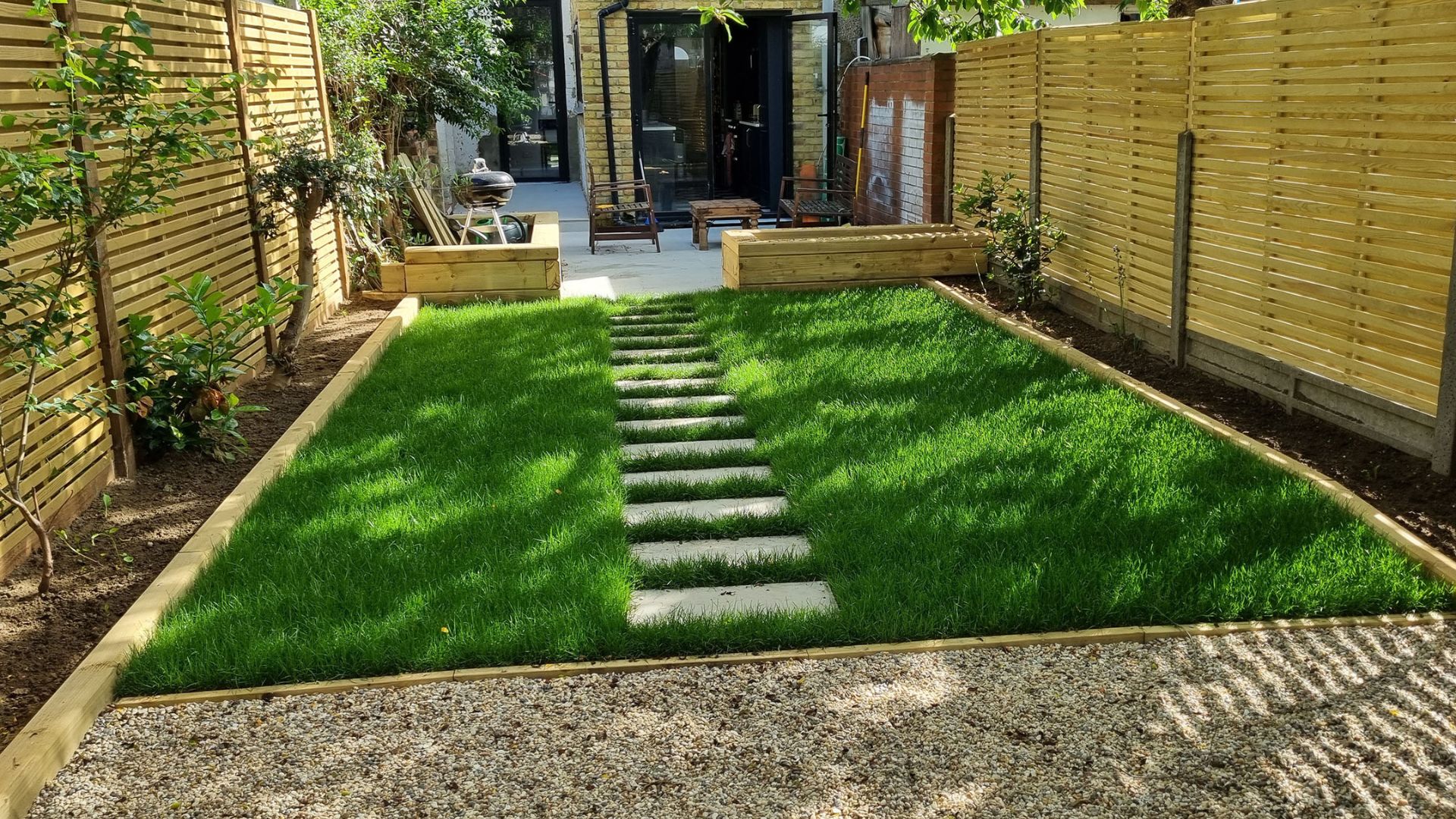
- The Low-Water Hardscape Hybrid- Gaining fast popularity in smaller Pinellas County lots where high-maintenance turf is not worth the investment. Permeable pavers, decomposed granite, and crushed shell groundcovers create clean, flexible outdoor living space, while specimen plants in strategic locations — a multi-trunk crape myrtle, a trio of sabal palms, a bougainvillea on a trellis — provide vertical interest without demanding constant attention. Water use drops dramatically. Maintenance time drops more.
- The Working Landscape- Every plant earns its place. Citrus trees serve as canopy anchors. Lemongrass defines bed edges and repels insects. Moringa, edible ginger, roselle hibiscus, and Seminole pumpkin mix productivity with ornamental value. In Tampa Bay’s year-round growing season, a working landscape is genuinely achievable — and homeowners who engage with their landscape as a productive system tend to be the ones who maintain it most consistently over time.
Budget Planning: Real Numbers for Pinellas County
Here is what landscape planning in Tampa Bay actually costs — not the aspirational version, the real one. Prices reflect current Pinellas County market conditions and assume standard residential lot sizes.
| Investment Level | Typical Cost | What It Gets You |
|---|---|---|
| Design consultation only | $350 – $1,200 | Professional site assessment, written zone plan, plant recommendations |
| Single zone – DIY install | $500 – $2,500 | Plants, mulch, bed prep for one focused area (e.g., front entry) |
| Single zone – pro install | $2,500 – $8,000 | Labor, materials, soil amendment, grading if needed |
| Drainage or rain garden | $1,800 – $6,500 | Grading, swale, rain garden planting, erosion control |
| Tree planting (per tree) | $400 – $1,800 | Varies by species, size, site access, soil amendment |
| Full property – pro design+install | $15,000 – $50,000+ | Complete redesign, irrigation, hardscape, trees, planting |
MONEY-SAVING OPPORTUNITY | Check Before You Budget
The Southwest Florida Water Management District (SWFWMD) and Pinellas County periodically offer rebates for turf removal, rain barrel installation, and Florida-Friendly Landscaping conversions. Some programs have covered up to $500 per qualifying project.
Before finalizing your budget, contact the Pinellas County Extension office or visit the SWFWMD website to check currently active incentive programs. The application window for these programs opens and closes seasonally — do not assume last year’s program is still running.
Two things matter more than the total number: sequencing and momentum. A $3,000 investment in the right zone at the right time outperforms a $15,000 whole-yard project done without a plan. Phase your investment. Lock in wins early. Build from a foundation that actually works.
Project Roadmap: From First Idea to Final Installation
This is the sequence that consistently produces the best results for Tampa Bay homeowners — regardless of budget, lot size, or design style.
- Observe first, spend second. Document your property across multiple conditions before buying anything. Sun patterns, drainage behavior after rain, wind exposure, existing plant health. This phase costs nothing and prevents hundreds or thousands of dollars in wrong decisions.
- Map your zones. Using your observations, sketch the distinct microclimates on your property. Label each by dominant condition: hot-dry, cool-shaded, wet-low, high-visibility, etc. This map is your design brief.
- Set your budget by zone, not by project. Decide which zone gets attention this season. Assign a real budget to it. This discipline prevents scope creep and produces better results than spreading a thin budget across the whole property.
- Build your plant palette from the ground up. Start with your zone’s actual conditions. Cross-reference with UF/IFAS Florida-Friendly plant lists, Pinellas County Extension recommendations, and reputable local nurseries. Build a shortlist of three to five species per zone before visiting any nursery.
- Fix soil and drainage before you plant anything. Amend sandy soil with compost. Address grading issues. If a zone has a drainage problem, design the solution into the planting plan rather than planting around it. This step is not optional.
- Plant in October or November. The optimal window in Pinellas County. Cooler temperatures reduce transplant stress, the tail end of the wet season helps with establishment, and plants have six months to set roots before the following summer. Avoid spring planting — plants established in April go straight into peak stress season.
- Commit to establishment watering. Every plant — even drought-tolerant natives — needs supplemental irrigation for the first growing season. This is the establishment investment. Skipping it after spending money on plants is the leading cause of preventable plant death in Tampa Bay landscapes.
- Evaluate after one full year. You now have real performance data from your specific property. What thrived? What struggled and why? Adjust before expanding to the next zone. Year-two planting decisions backed by observed site behavior are far more reliable than year-one guesses.
When to DIY vs. When to Hire a Professional
This is the decision most homeowners overthink on the wrong axis. The question is not whether you are capable. The question is whether the consequences of getting it wrong are recoverable.
Recoverable if You Get It Wrong — Good DIY Territory
- Planting Florida-Friendly species in prepared, well-drained beds with no grading complications.
- Installing or expanding mulched planting beds in existing zones.
- Replacing turf in manageable sections with groundcovers or hardscape.
- Container planting and seasonal color in high-visibility zones.
- Most plant-level decisions where the downside is a dead plant, not a damaged structure.
Not Easily Recoverable — Get Professional Help
- Drainage and grading issues, especially near structures or in areas prone to pooling. Bad drainage repairs are expensive; bad drainage left untreated is more expensive.
- Tree installation, removal, or major pruning near structures, rooflines, or utility lines. In Pinellas County’s wind zone, a poorly sited or structurally compromised tree is a genuine hurricane liability.
- Irrigation system design or modification. Improperly zoned irrigation on sandy Florida soil either drowns plants or misses them entirely — both outcomes cost money over time.
- Permitting-required work (retaining walls over certain heights, major grading, removal of protected species).
THE MOST USEFUL $300 YOU WILL SPEND
Many landscape professionals offer a one-time consultation — site walk, zone assessment, plant recommendations, drainage observations — for a few hundred dollars. You take the notes, you do the work, they provide the local expertise.
For homeowners who want to DIY the installation but lack confidence in the planning, this model delivers most of the value of professional design at a fraction of the cost. Ask specifically for a written zone-by-zone recommendation, not just a verbal walkthrough.
Pro Tip: Tree Placement & Long-Term Growth Planning
Every other landscape mistake is recoverable. A tree in the wrong place is a 20-year commitment to managing the consequences.
Tree decisions carry more long-term weight than any other element in Tampa Bay landscape planning — and they are also where the most costly mistakes happen. A crape myrtle planted under a power line. A laurel oak ten feet from a foundation. A fast-growing queen palm that towers beautifully until a tropical storm takes it through the roof. These are real and common outcomes of decisions that felt fine at the time.
Here is a framework for getting tree placement right from the start:
- Research mature size before you buy, not after. A live oak’s canopy can span 60 to 80 feet at maturity. A southern magnolia planted 12 feet from your house is a 30-year pruning project. Look up the mature height and spread of every canopy tree before it leaves the nursery.
- Position for energy performance. A canopy tree on the southwest corner of your home will intercept the hottest afternoon sun from June through September. Over its life, a well-positioned shade tree can reduce cooling loads by 15 to 20 percent. That is a financial return measured in decades.
- Select for wind resistance in Pinellas County’s wind zone. Live oaks, sabal palms, and bald cypress are among the region’s most wind-resilient species. Laurel oaks are fast-growing and common but structurally brittle. Avoid planting brittle species near structures regardless of how appealing they look in a nursery.
- Call 811 before any tree installation. Sunshine 811 locates all underground utilities on your property at no cost. This takes 15 minutes and prevents the kind of problem that can turn a tree installation into an emergency. Make it a habit.
- Think about root zone, not just canopy. Large tree roots follow water and oxygen. They move toward irrigation lines, under pavers, and along foundation edges over time. Plant large canopy trees at species-appropriate distance from structures — typically half the mature canopy spread, at minimum.
Final Thoughts: Build a Yard That Works With Florida
Tampa Bay is an extraordinary place to garden. The growing season is essentially year-round. The native plant palette is diverse, beautiful, and genuinely well-suited to local conditions. The rainfall, while intense, is predictable enough to design around. The challenges are real — the heat, the sandy soil, the stormwater — but they are all solvable with the right approach.
The homeowners who thrive here are not fighting their climate. They are not trying to recreate a North Carolina garden in Pinellas County. They understand what their property actually is — its soil, its drainage, its microclimates, its exposure — and they design a system that fits.
That system does not have to be built in a weekend. It does not require a large budget to begin. It starts with observation, a zone map on a piece of paper, and the decision to choose plants that belong here over plants that merely look appealing.
Start there. Everything else follows.