The Weekend Warrior’s Dilemma
You’ve stared at your Pinellas County yard long enough. The patchy St. Augustine grass, the overgrown hedges blocking your curb appeal, the flower beds that never quite look like the photos you saved – something has to change.
So you face the question every homeowner eventually hits: Do I grab a shovel and handle this myself, or do I call in a professional landscape designer?
Understanding what professional landscape design costs in Pinellas County – and what those fees actually cover – is the foundation of any honest DIY vs professional comparison.
It’s not a simple answer. DIY landscaping can save real money and deliver genuine satisfaction – but it can also cost you significantly more in mistakes, wasted materials, and lost weekends than hiring a pro from the start. In Florida’s demanding climate, getting it wrong isn’t just an aesthetic problem. It can mean dead plants, drainage failures, or HOA violations that follow you for years.
This guide breaks down the honest DIY vs professional landscaping comparison – by cost, quality, complexity, and long-term value – so you can make the right call for your home or commercial property anywhere in Pinellas County.
This decision connects directly to every other planning choice covered in the complete custom landscape design guide for Pinellas County homeowners.
Quick Answer
For simple maintenance tasks like mulching, pruning, and seasonal planting, DIY is often cost-effective and completely manageable for most Pinellas County homeowners. For full redesigns, drainage corrections, commercial properties, or HOA-governed communities, hiring a professional landscape designer typically delivers stronger long-term ROI. The dividing line is project complexity – and the real cost of getting it wrong.
Want to know which category your project falls into? Use the DIY Risk Score checklist below.
What DIY Landscaping Actually Looks Like in Pinellas County
Florida is not a forgiving climate for landscaping guesswork. You’re working with:
- Intense summer heat and humidity that stress plants not matched to your microclimate
- Sandy, nutrient-poor soils that require real amendment before most species establish
- Year-round irrigation demands and watering restrictions enforced by the Southwest Florida Water Management District (SWFWMD) – most Pinellas residents are limited to 2 days per week
- Salty, coastal air in waterfront neighborhoods like Shore Acres, Snell Isle, or Clearwater Beach that dramatically limits which species survive long-term
- Active HOA guidelines in many Pinellas communities governing plant height, turf type, and approved materials
DIY projects that tend to work well:
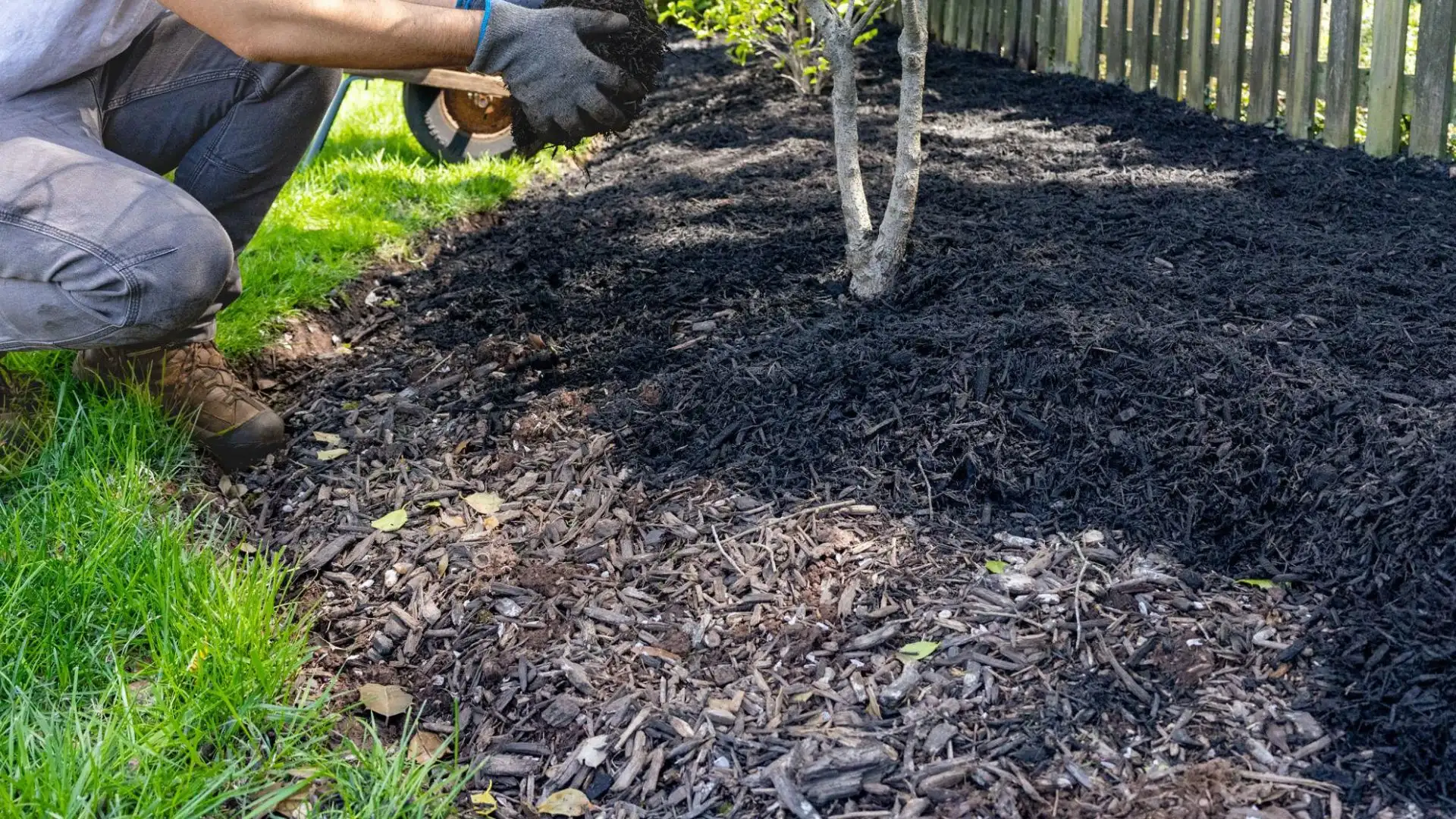
- Mulching and refreshing existing beds
- Planting container-grown shrubs or perennials within an established design
- Seasonal color updates – annuals, potted arrangements, lanai containers
- Spot fertilizing and basic lawn overseeding
Where DIY consistently hits a wall:
- Full landscape redesigns involving grading or drainage correction
- Irrigation system installation or major zone retrofitting
- Tree selection, proper planting depth, and root zone spacing
- Hardscaping – pavers, retaining walls, outdoor kitchens
- Building a Florida-Friendly or low-water plant palette that actually survives
The Real Cost Comparison – and the Hidden Expenses DIYers Don’t See
This is where most homeowners make their first miscalculation – comparing DIY material costs to professional quotes without accounting for everything involved.
DIY Landscaping Costs (Typical Pinellas County Range)
| Project | DIY Material Cost | Hidden Cost Reality |
| Basic mulch refresh (1,000 sq ft) | $150–$300 | 4–8 hrs labor, mulch delivery fees |
| New planting bed installation | $400–$900 | Wrong plant selection = full replacement cost |
| Full front yard redesign | $1,200–$3,500 | Design errors can double the budget |
| Irrigation system (new install) | $800–$2,000 | Permit fees, code non-compliance fines |
| Sod installation (1,000 sq ft) | $350–$700 | Grade prep failure = re-sod within one season |
What those numbers don’t capture: A poorly planned landscape in Florida can fail within a single summer. Replacing dead trees, re-sodding improperly prepped ground, or removing invasive plants can easily cost more than the original project budget – and that’s before accounting for a second round of design.
Professional Landscaping Costs (Pinellas County)
| Service | Average Professional Cost |
| Landscape design consultation | $150–$500 |
| Full residential design plan | $500–$2,500 |
| Design + installation (mid-size yard) | $3,000–$12,000+ |
| Ongoing residential maintenance | $100–$350/month |
| Commercial property maintenance | $300–$1,500+/month |
The value equation: A professional landscape designer doesn’t just plant things – they produce a cohesive plan accounting for drainage, sun and shade exposure, mature plant sizing, irrigation zone mapping, and your long-term maintenance budget. That upfront investment typically pays back through reduced recurring costs, healthier plant survival rates, and measurable property value gains.
3 Situations Where DIY Landscaping Actually Saves You Money
Routine Maintenance Tasks
Mulching, pruning established shrubs, pulling weeds, edging beds, and rotating seasonal color are all completely within reach for an attentive homeowner. These tasks don’t require specialized knowledge and carry manageable stakes if something goes wrong.
Small-Scale Enhancements to an Already-Designed Yard
Adding a container garden on your lanai, placing a few specimen palms in established beds, or installing a small herb garden near your kitchen are low-risk projects. Mistakes are easy to correct without major cost.
When You Have the Time and Willingness to Learn Properly
Florida has exceptional free resources. The University of Florida IFAS Extension has a Pinellas County office with downloadable guides on local plant selection, SWFWMD-compliant irrigation scheduling, and soil health. If you enjoy the process and do the research, DIY can be genuinely rewarding for low-complexity projects.
DIY Risk Score – Figure Out Where Your Project Stands
Answer these 5 questions honestly. Count one point for every Yes answer.
| # | Question | Your Answer |
| 1 | Does the project involve grading, drainage correction, or irrigation work? | Yes / No |
| 2 | Is the area visible from the street or directly affects resale value? | Yes / No |
| 3 | Are you in an HOA community with landscaping approval requirements? | Yes / No |
| 4 | Is your property within 1 mile of the Gulf, Tampa Bay, or a coastal waterway? | Yes / No |
| 5 | Has a previous DIY landscaping attempt on this property not survived one full season? | Yes / No |
Your Score:
- 0-1 Points: Strong DIY Candidate. Low-risk project. Proceed with confidence using UF IFAS resources as your guide.
- 2-3 Points: Hybrid Approach. Consider a one-time design consultation to create the plan, then execute the installation yourself with a professional blueprint in hand.
- 4-5 Points: Call a Professional. The cost of getting this wrong exceeds the cost of doing it right the first time. This is a risk management question, not a budget question.
When You Should Hire a Landscape Designer – and Why It Usually Costs Less Than Waiting
You’re Preparing a Property for Sale
Curb appeal directly affects sale price and time on market. Real estate professionals throughout the Tampa Bay area consistently cite exterior presentation as one of the top drivers of buyer interest at first showing. A professional landscape designer maximizes your return by focusing spend on high-impact areas – front entrance, driveway border, patio framing – rather than spreading budget thin across the entire property.
You Own or Manage a Commercial Property
For property managers and commercial owners in Pinellas County, landscaping is a compliance and liability issue as much as an aesthetic one. Overgrown trees near structures, poorly maintained retention ponds, and neglected common areas don’t just undermine first impressions – they invite municipal code violations and tenant escalations. Professional commercial landscaping programs deliver scheduled, documented maintenance that keeps properties consistently presentable and compliant.
Your Yard Has Drainage or Standing Water Problems
If you have standing water after rain, active erosion on slopes, or moisture accumulation near your foundation, no amount of replanting fixes the underlying problem. A qualified landscape designer or contractor can assess grading, recommend swales or French drains, and redesign planting zones to manage water flow correctly – critically important in the low-lying areas common throughout St. Petersburg and the bayfront communities.
You’re Starting from Scratch After New Construction
Builder-grade landscapes are minimal by design. If you’ve moved into a new home in communities like Starkey Ranch, Bexley, or a newer Clearwater development, you’re likely looking at a blank canvas with compacted soil and builder-installed turf that needs a real landscape plan. Getting professional design input now prevents costly retrofitting later.
You’re Navigating HOA Requirements
Many Pinellas County neighborhoods – especially gated communities, waterfront districts, and newer subdivisions – require architectural review board approval for landscape changes. A professional familiar with local HOA standards eliminates the cost and frustration of rejected submittals and mandatory corrections.
What a Landscape Designer Does That No YouTube Tutorial Can Teach You
Beyond execution, professional landscape designers bring something DIY genuinely cannot replicate: design thinking applied to your specific property conditions.
Site Analysis First
A professional assesses soil composition, sun and shade patterns throughout the day, drainage behavior during rain events, irrigation coverage maps, and proximity to structures – all before recommending a single plant species.
Plant Selection Calibrated to Longevity
In Pinellas County, this means choosing species that tolerate salt air near the water, selecting drought-tolerant Florida natives where possible to lower irrigation costs, and anticipating mature sizing so plants don’t become structural or aesthetic problems within five years. Big-box nursery plants are frequently sourced from out-of-state and are not acclimated to local conditions – a detail that costs DIYers significant money every summer.
Cohesive Aesthetic With Functional Logic
A landscape design plan considers sightlines, seasonal color sequencing, texture variation, and how the space functions across different times of day and year – not just how it photographs. The difference between a yard that looks planted and one that looks designed is almost always a professional’s eye for spatial relationships.
Code and Permit Compliance Built In
Irrigation permits, tree removal permits, and hardscape construction permits are all required for certain projects in Pinellas County. Missing them creates title and resale complications. Professionals handle permitting routinely as part of the project – not as an afterthought.
The Bottom Line: Match the Approach to the Risk – Not Just the Budget
| Situation | Recommended Approach |
| Seasonal color refresh | DIY – low stakes, easy to adjust |
| Full front yard redesign | Professional – high visibility, high impact |
| Commercial property maintenance | Professional – compliance and consistency required |
| Minor pruning and mulch refresh | DIY – good recurring task |
| Drainage or grading issues | Professional – structural problem, not cosmetic |
| New construction landscape buildout | Professional – sets the foundation for years ahead |
| HOA-governed community | Professional – avoid approval complications |
| Minor irrigation repair | DIY may be sufficient for simple fixes |
| Irrigation design and full installation | Professional – efficiency, compliance, and zoning |
| Coastal or waterfront property | Professional – plant selection expertise critical |
The mistake most Pinellas County homeowners make isn’t choosing one approach or the other – it’s starting a project DIY, running into problems halfway through, and then calling a professional to fix it. That’s how you pay twice.
Questions to Ask Before You Hire a Landscape Designer in Pinellas County
- Are you licensed in Florida? Landscape contractors performing installation work above certain thresholds must hold a Florida Contractor license. Ask for the license number and verify it through the Florida DBPR.
- Do you have direct experience in my neighborhood? Coastal, HOA, and commercial properties each carry unique demands. Local experience isn’t optional – it’s the differentiator.
- Do you offer a post-installation maintenance program? Ongoing care is where long-term results are protected or lost.
- Can I own the design plan independently of your installation bid? A plan you own lets you get multiple installation quotes without starting the design process over.
- Are you familiar with Florida-Friendly Landscaping™ principles? This UF/IFAS program promotes sustainable, low-input landscaping matched to our environment. Familiarity with it signals real local expertise.
Let’s Talk About Your Property – No Obligation
Whether you’re a homeowner in Safety Harbor ready to finally build the outdoor space your house deserves, a property manager maintaining a commercial complex in Clearwater, or a St. Pete family dealing with a drainage problem that’s gone unresolved for two rainy seasons – the right landscape investment pays back in property value, reduced maintenance headaches, and a yard you’re genuinely proud of.
Florida’s climate makes self-directed projects more vulnerable to the landscape design mistakes that DIY projects most often produce – particularly wrong plant selection, drainage errors, and irrigation missteps.
The most common thing we hear before a first consultation is: “I looked up a few landscapers and the quotes were higher than I expected.”
That reaction makes sense – especially when you’re comparing a professional’s full-scope bid against what a DIY project seems to cost in materials. But the real comparison isn’t $900 vs. $4,200. It’s $900 + failed plants + replacement costs + your weekends vs. one fixed investment in a design built to last.