
A homeowner in Clearwater came to us last fall with two screenshots on her phone and one very clear problem. The first showed a sleek, angular yard with concrete planters, ornamental grasses, and almost no flowers. The second showed a lush, curved cottage garden overflowing with color and a brick path that wound toward the front door. She loved elements of both. Her yard, meanwhile, sat completely untouched – a blank patch of patchy St. Augustine grass she had been too paralyzed to start on for two years.
That kind of indecision is more common than most people admit, and it almost always comes from the same place: not knowing the real practical differences between modern vs traditional landscaping before committing to one.
This guide clears that up. It breaks down both landscape styles honestly – what each one looks like, what each one costs in time and money, and which one actually works for your home and for Florida’s Gulf Coast climate. By the end, you will have a clear direction instead of two conflicting Pinterest boards. Think of it as your practical garden styles guide before a single dollar gets spent on plants or hardscape. Style selection is one of the most important early decisions in any custom landscape design in Pinellas County – and it shapes every choice that follows, from plant palette to long-term maintenance cost.
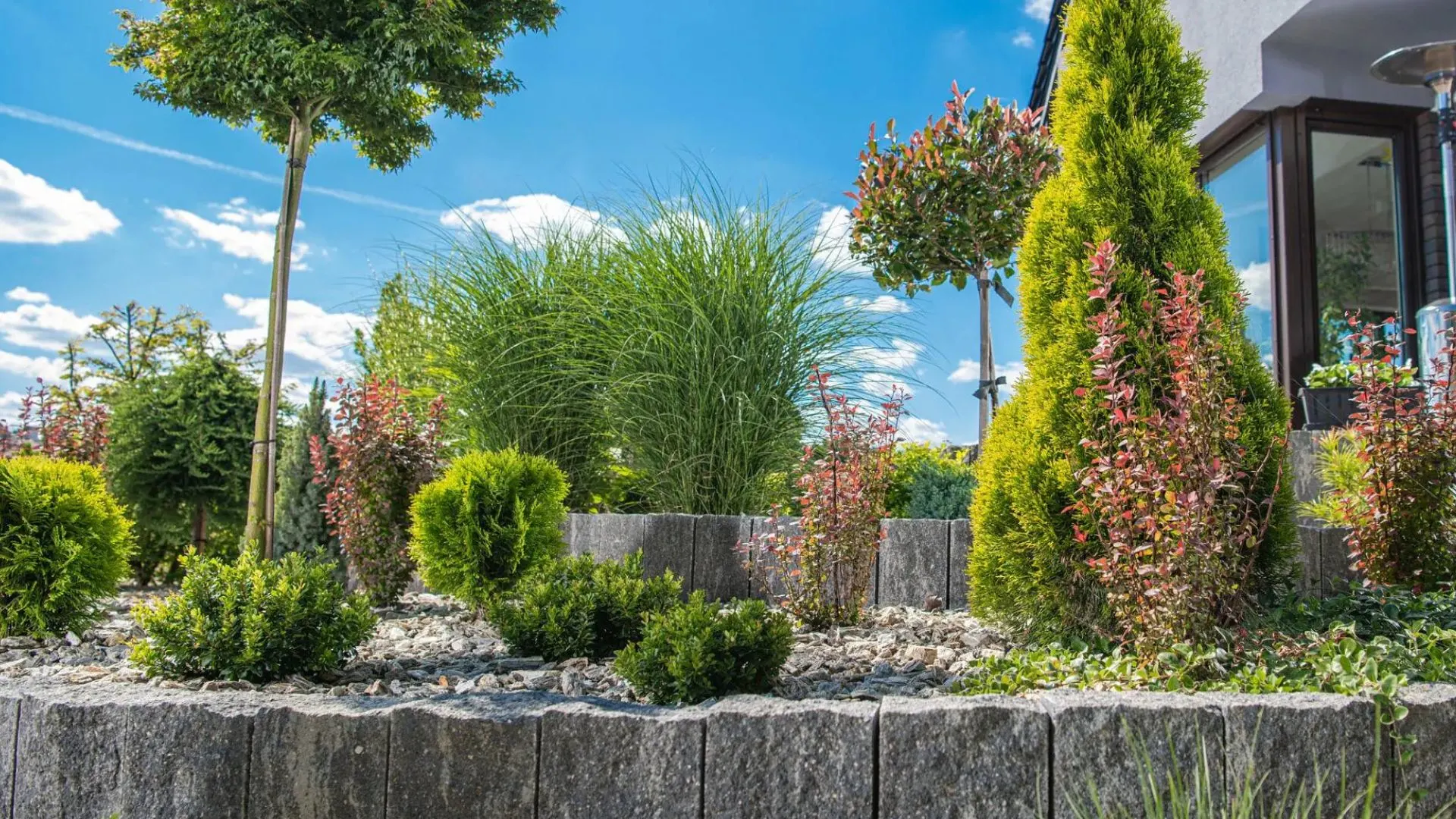
Modern Landscaping: What You Gain – and What It Costs You
Modern landscaping is built on intentional simplicity. Think clean horizontal lines, a tightly edited plant palette, and hardscape elements – concrete, gravel, and steel edging – that carry as much visual weight as the plants themselves. Symmetry is optional; restraint is not.
A modern yard typically features:
- Geometric planting beds with sharp, defined edges and consistent spacing
- Ornamental grasses or native groundcovers rather than mixed annual color
- Specimen trees or large structural plants used sparingly as focal points rather than in masses
- Hardscape carrying the visual load – poured concrete patios, decomposed granite paths, or large-format pavers that need no irrigation and no seasonal replacement
- Texture and form over bloom cycles – color is secondary to structure in a modern design
What you gain: a yard that looks deliberate year-round and demands far less routine maintenance once plants establish. What it costs you: a higher upfront investment in hardscape materials and, in the early years, patience – a modern yard needs mature specimen plants to avoid looking sparse.
Buy larger plants at installation or the design will read as unfinished for its first two seasons. Style choice is one of the most direct drivers of landscape design cost in Pinellas County – both at installation and across the long-term maintenance cycle.
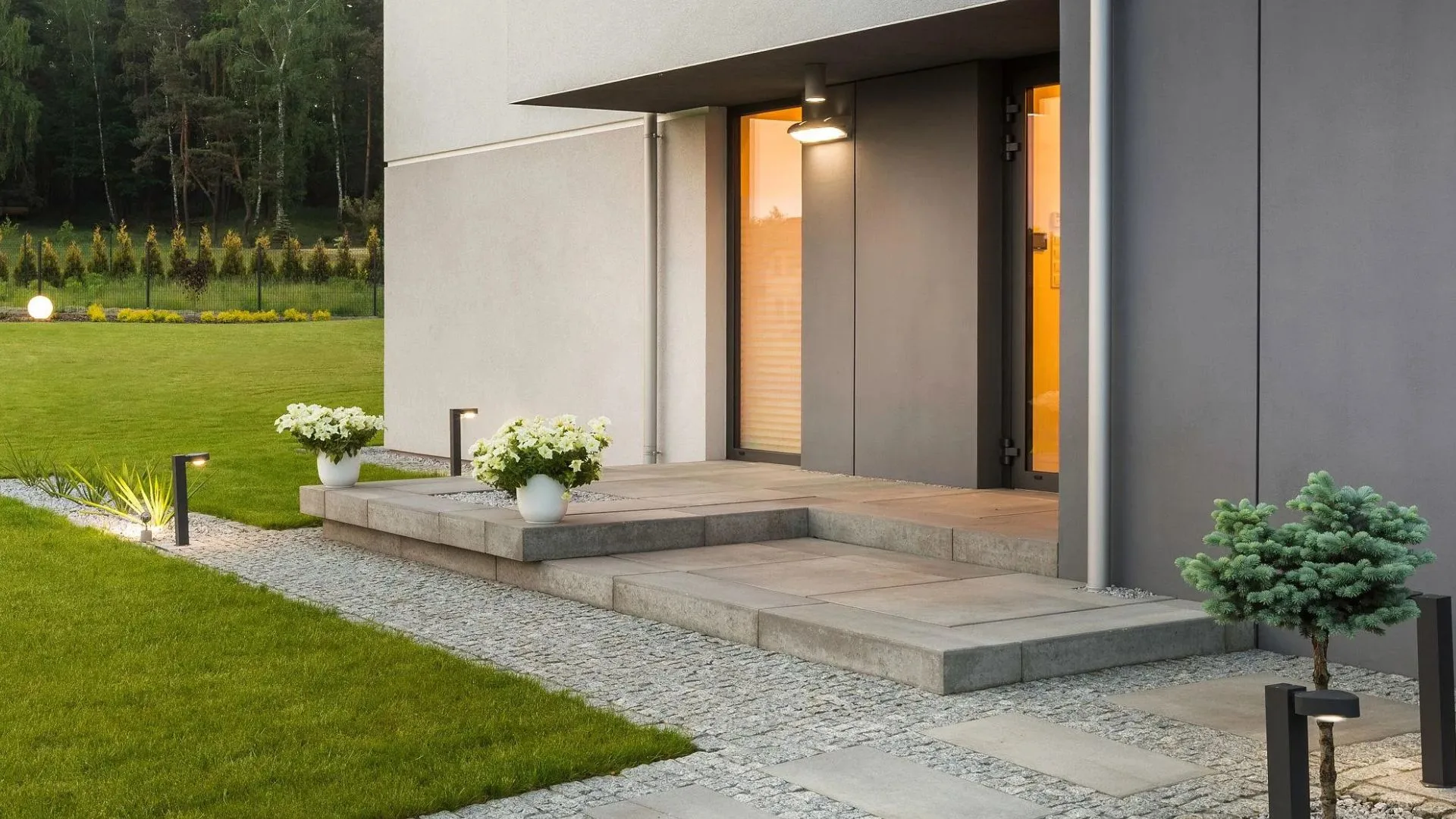
Traditional Landscaping: Why It Feels Welcoming – and Where It Gets Expensive
Traditional landscaping draws from formal European garden design and the warmth of English cottage gardens. It tends to feel fuller, richer, and more layered. Where modern says less, traditional says more – but organized. The result reads as warm and established from the street, which is exactly why it remains the most requested residential style across Pinellas County.
A traditional yard typically includes:
- Curved planting beds with mixed shrubs, perennials, and seasonal annuals
- Natural pathways in brick, flagstone, or textured pavers that curve rather than cut
- Symmetrical front layouts that mirror each side of the entry and frame the facade
- Staggered bloom times so something is always in color across the seasons
- Foundation plantings – shrubs close to the house that soften the hard line between structure and ground
Why it feels welcoming: the layered abundance and seasonal color create an immediate sense of life and care that modern design takes longer to establish.
Where it gets expensive: Florida’s climate means annuals rotate faster than in northern gardens – expect to replant seasonal color two to three times a year rather than once, and budget for that replacement cycle before you commit to a traditional design with heavy annual planting.
Modern vs Traditional Landscaping: The Differences That Actually Matter
A thorough landscape styles comparison goes beyond aesthetics. The four factors that matter most in practice are maintenance load, upfront cost, how the yard ages, and how well each style survives Florida.
Maintenance. Modern landscapes need less routine upkeep once plants establish – fewer varieties means fewer things to prune, deadhead, or replace on a seasonal cycle. Traditional landscapes demand consistent attention: regular trimming, seasonal color rotations, and more active management to keep beds looking intentional rather than overgrown.
Upfront cost. Traditional landscapes typically cost less at installation because they rely on more common plant material. Modern landscapes often cost more upfront because of hardscape components – concrete, steel edging, large-format pavers – but those elements hold value far longer and need less replacement over a 10-year horizon.
Resale value. This is where the numbers matter most. A Virginia Tech study on residential landscaping found that quality landscape improvements add between 5.5 and 12.7 percent to a home’s resale value – a return that compounds over time as plants mature. The style you choose affects how much of that return you capture: a design that matches your home’s architecture consistently outperforms one that fights it, regardless of which style that means.
How each style ages. A traditional yard softens and fills in beautifully as plants mature – it earns character over time. A modern yard needs that initial investment in larger or more established specimen plants to avoid looking sparse and underplanted in its first two or three years.
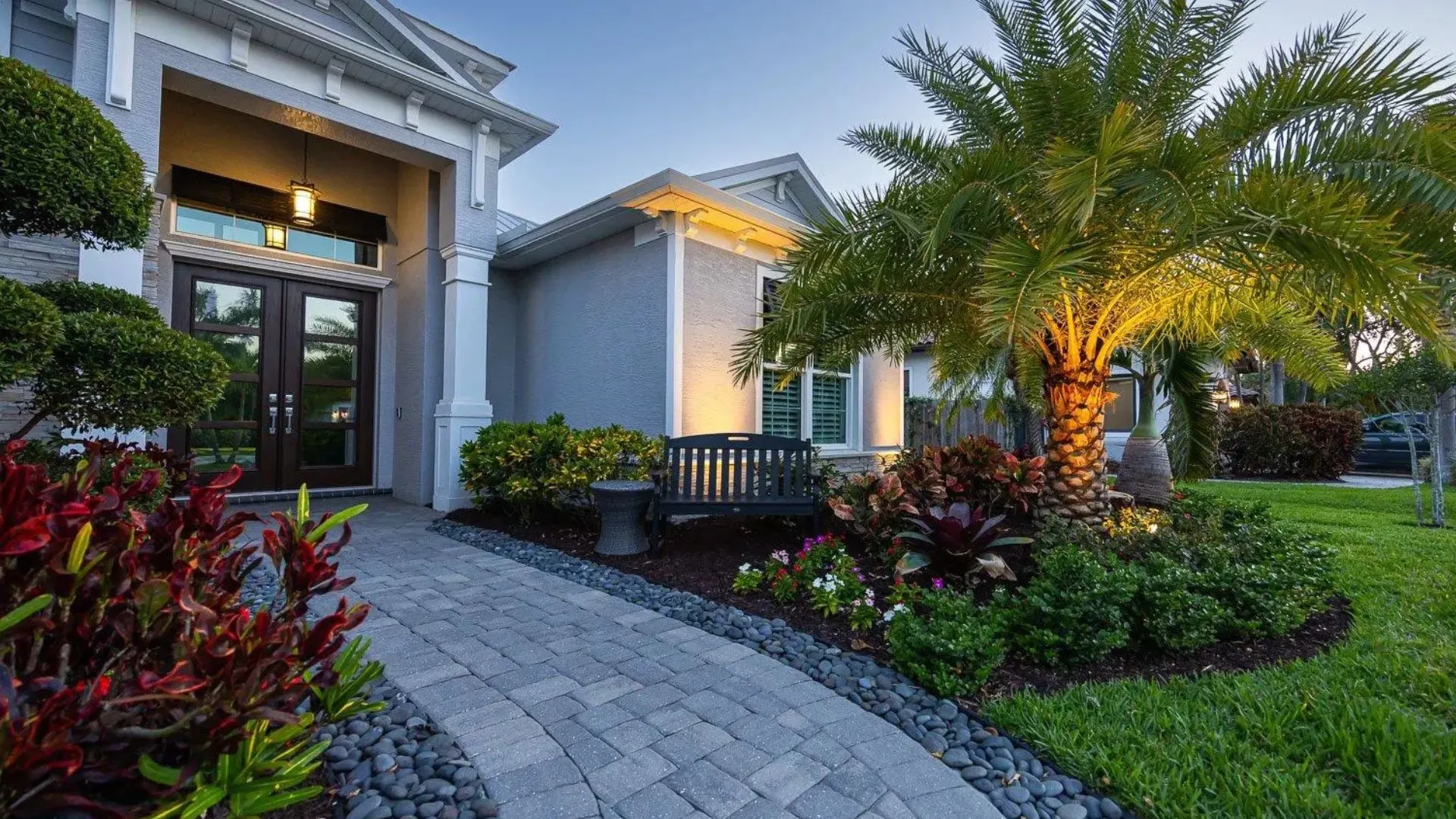
Let Your Home’s Architecture Make the First Decision
Your house is the most reliable signal you have – and the most overlooked one. Curb appeal is not just about how a yard looks in isolation. It is about how the yard and the home read as a single composition from the street. A beautiful yard that contradicts the architecture of the house will always look slightly off, no matter how well it is maintained. Look at your roofline, exterior material, window style, and entry details before you look at any design ideas for your yard.
- Flat or shed rooflines, stucco or fiber cement exteriors, large windows and minimal trim – lean modern
- Hip roofs, brick or painted wood siding, decorative trim or columns, arched entries – lean traditional
- Mixed architectural signals – a blended approach works well: modern hardscape structure with traditional plant layering and a softer color palette
One pattern we see consistently across St. Pete and Clearwater neighborhoods: homeowners who choose a landscape style they love online without checking whether it fits the bones of their home. A sleek minimalist yard in front of a 1960s Florida ranch house looks disconnected rather than updated.
Strong curb appeal comes from alignment between the home and the landscape, not from picking the most popular style on Pinterest. The architecture comes first. The style follows.
What Florida’s Climate Demands From Either Style
Here is the honest reality for any homeowner in Pinellas County: the landscape style you choose has to survive a Florida summer – and then a Florida winter, a hurricane season, and extended dry periods between them. Style is secondary to survival, and good Florida landscape design accounts for both.
Choosing a style that does not match Florida’s subtropical climate is one of the landscape design mistakes most common in Florida yards – and among the most avoidable when the decision is made with local knowledge.
For modern landscapes in this region: lean on drought tolerant landscaping principles from the start. Florida-native ornamental grasses like Muhly Grass and Waxahachie Grass handle both dry spells and standing water after heavy rain. Use concrete and decomposed granite hardscape rather than wood, which deteriorates rapidly in Gulf Coast humidity. Select specimen trees rated for USDA Hardiness Zone 9b or 10a – anything outside that range becomes a replacement cost waiting to happen.
For traditional landscapes here: swap out plants that need a northern climate. Lavender and English boxwood struggle in Pinellas County – replace them with Firebush, Simpson’s Stopper, and native Azaleas that deliver the same cottage-style warmth and seasonal abundance without demanding conditions Florida cannot reliably provide. Native selections also dramatically reduce irrigation demand, which matters in a county with active water restriction ordinances.
The goal in either style is a yard that looks intentional in March and is still alive and healthy in September. That standard is achievable in both modern and traditional design – but only if the plant palette is built for Gulf Coast conditions from day one.
The Tree Decision – The One Choice That Outlasts Everything Else
Whether your yard goes modern or traditional, trees are the single element that shapes a landscape’s character more than any other plant, structure, or design decision. They are also the element most homeowners under plan for – and that mistake compounds for decades.
Here is what a licensed arborist will tell you: the tree you place today determines what your yard looks like in 15 years more than everything else combined. In a modern landscape, one well-placed Live Oak or multi-trunk Crape Myrtle becomes the entire composition. In a traditional landscape, trees frame the home’s facade and anchor the symmetry of the beds around them.
The critical rule in Pinellas County: always check the mature canopy spread, not just the mature height. A Slash Pine looks entirely manageable at 10 feet. At maturity it can reach 80 feet tall with a root system that threatens foundations, driveways, and underground irrigation lines.
Plant large shade trees at least 20 to 25 feet from your home’s foundation, always call 811 before digging any planting hole, and consult a certified arborist before placing any tree within range of your structure. Getting the tree right protects every other dollar you put into the landscape around it.
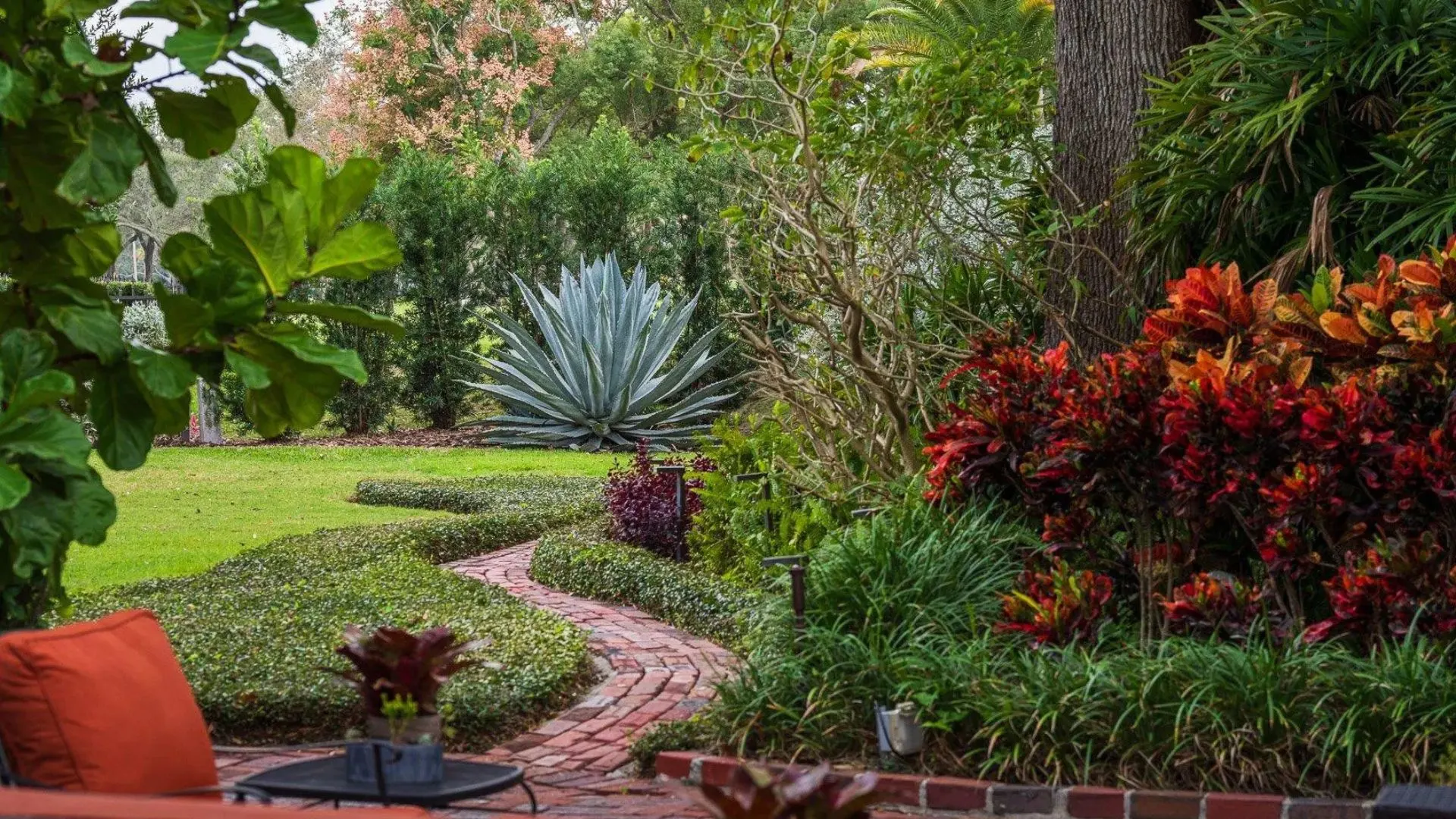
So Which Style Fits Your Home?
If you want clean lines, lower routine maintenance, and a yard that makes a graphic statement from the street, modern landscaping fits your goals – and Florida has enough native plants and hardscape options to do it beautifully without looking cold or sterile.
If you want warmth, seasonal color, and a yard that feels welcoming and full, traditional landscaping delivers that – as long as you adapt the plant palette to what actually thrives on the Gulf Coast rather than copying a design built for a different climate.
And if you are still not sure? Most properties across Pinellas County – from Safety Harbor bungalows to Downtown St. Pete townhomes with private garden space – benefit most from a hybrid approach: the clean structure of modern design paired with the warmth of traditional planting. That combination handles Florida’s climate well and works across nearly every architectural style in this region.
Not Sure Where to Start? Let’s Walk Your Yard Together.
Choosing between landscape styles is far easier once someone walks your actual property – looks at your architecture, your soil, your drainage patterns, and how sunlight moves across the yard at different times of day. That is where a general guide ends and a real plan begins.
We have helped homeowners, HOA communities, and commercial property managers across Pinellas County navigate exactly this decision – and we know what survives a Gulf Coast summer and what does not. That homeowner in Clearwater who came to us with two Pinterest boards and two years of indecision? She chose a hybrid approach, and her yard was in the ground within six weeks of her first consultation.
Book your free consultation with the team at Pinellas Landscaping Websites today. We will walk your property, assess your soil and drainage conditions, review your home’s architecture, and deliver a written design direction plan within 48 hours – no cost, no obligation, and no generic advice that ignores the realities of landscaping on the Gulf Coast.